Prostate Health After 40: Saw Palmetto, Beta-Sitosterol & What Really Works Men's Hormonal Health · Vibrant Life Symphony Prostate Health After 40: Saw Palmetto, Beta-Sitosterol & What Really Works Evidence-Based 13 min read Men's Health Series In our last guide, we broke down what the research actually shows about natural testosterone boosters — and closed with a promise to turn to a related but distinct topic. This is that guide: prostate health , and specifically the two ingredients that show up in almost every prostate formula on the market — saw palmetto and beta-sitosterol. Somewhere around 40, a lot of men start noticing small things they never had to think about before: an extra trip to the bathroom at night, a stream that isn't quite as strong, a sense of not fully emptying the bladder. Search "prostate supplement" and you'll be...
How to Fix Insomnia Naturally: The Complete Science-Backed Guide
How to Fix Insomnia Naturally: The Complete Science-Backed Guide
Sleep Science · Vibrant Life Symphony
How to Fix Insomnia Naturally: The Complete Science-Backed Guide
Evidence-Based14 min readUpdated June 2026
You've tried everything. Counting sheep, warm milk, melatonin gummies, white noise apps, a new mattress. Maybe even sleeping pills that left you groggy the next day without actually fixing the problem. And still — night after night — sleep refuses to come easily, or it comes and breaks apart into fragments before dawn.
If you've been living with insomnia, you already know how isolating and exhausting it is. What you may not know is that insomnia is one of the most treatable conditions in all of behavioral health — and the most effective treatment doesn't involve medication at all.
This guide walks you through exactly what insomnia is, why the most common "tips" rarely work, and the complete, science-backed protocol — based on Cognitive Behavioral Therapy for Insomnia (CBT-I), the gold-standard treatment recognized by sleep medicine organizations worldwide — that can fix insomnia naturally and durably.
30,000+
Adults studied across 241 CBT-I research trials
#1
First-line treatment recommended over sleep medication
2-4
Weeks for most people to see meaningful improvement
70-80%
Of CBT-I patients experience significant symptom improvement
What Insomnia Actually Is — And Why Common Advice Fails
Insomnia is clinically defined as persistent difficulty falling asleep, staying asleep, or experiencing non-restorative sleep, occurring at least three nights per week for three months or longer, despite adequate opportunity for sleep. It affects daytime functioning — concentration, mood, energy, and overall quality of life.
Here's what most people get wrong: they treat insomnia as a sleep problem to be solved with sleep tips. But chronic insomnia is, in most cases, a learned pattern — the brain has formed an association between the bed and wakefulness, frustration, and anxious anticipation rather than rest. This is precisely why generic advice like "just relax" or "try not to think about it" so often fails: it doesn't address the underlying behavioral and cognitive mechanisms keeping the cycle alive.
Key insight: A comprehensive 2025 analysis of 241 studies involving over 30,000 adults found that the most effective insomnia treatment combines cognitive restructuring, sleep restriction, and stimulus control — delivered together, not in isolation. This is the foundation of CBT-I.
The Gold-Standard Treatment: What Is CBT-I?
Cognitive Behavioral Therapy for Insomnia (CBT-I) is recognized by the American Academy of Sleep Medicine and sleep clinics worldwide as the first-line treatment for chronic insomnia — meaning it should be tried before sleep medication, not after. Unlike medication, which manages symptoms temporarily, CBT-I addresses the root behavioral and cognitive patterns driving insomnia, producing improvements that last well beyond the treatment period.
CBT-I is built on several core components working together:
🛏️ Stimulus Control
This technique rebuilds the association between your bed and sleep. The core rule: use your bed only for sleep — not for reading, scrolling your phone, working, or lying awake worrying. If you can't fall asleep within roughly 20 minutes, get up, go to another room, and return only when sleepy. Over time, this retrains your brain to associate the bed exclusively with sleep rather than wakefulness and frustration.
⏰ Sleep Restriction Therapy
Counterintuitive but highly effective: sleep restriction temporarily limits your time in bed to match your actual average sleep time, which increases sleep drive and consolidates fragmented sleep into a more continuous, efficient block. As sleep efficiency improves — typically measured as time asleep divided by time in bed — the sleep window is gradually extended. This is one of the most powerful components identified across CBT-I research.
🧠 Cognitive Restructuring
Chronic insomnia is often maintained by anxious, catastrophic thoughts about sleep itself — "I'll never fall asleep," "Tomorrow will be ruined," "I need exactly 8 hours or I can't function." Cognitive restructuring identifies and challenges these unhelpful beliefs, replacing them with more accurate, less anxiety-provoking thoughts that reduce the mental hyperarousal that blocks sleep onset.
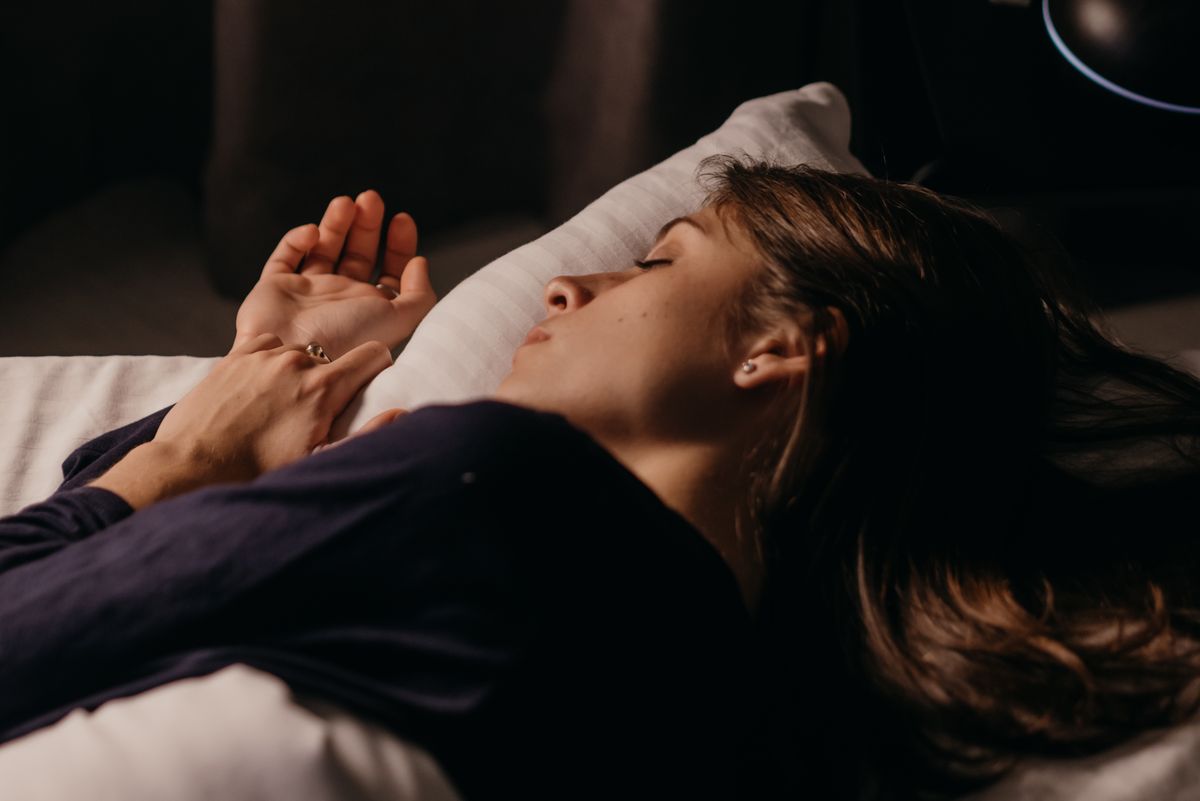
CBT-I retrains the brain's relationship with sleep — addressing the behavioral and cognitive patterns that keep chronic insomnia alive.
Signs Your Insomnia Needs This Approach
Do any of these patterns sound familiar? If so, this protocol was designed specifically for you.
Lying awake for 30+ minutes trying to fall asleep
Waking frequently and struggling to fall back asleep
Feeling anxious or dreading bedtime itself
Watching the clock and calculating remaining sleep time
Sleeping fine away from your own bed
Racing thoughts the moment you lie down
Relying on medication that leaves you groggy
Daytime fatigue despite "enough" hours in bed
Frustration and dread building around sleep itself
Trying countless tips with no lasting improvement
Why Generic Sleep Tips Don't Fix Chronic Insomnia
Most popular advice — chamomile tea, lavender oil, counting sheep — targets relaxation, which can help with occasional sleeplessness but rarely resolves chronic, learned insomnia patterns. These tips don't address the core issues: a dysregulated sleep drive, a bed associated with wakefulness, and anxious cognitive patterns about sleep itself.
This is why so many people feel like they've "tried everything" without success — they've tried relaxation techniques without addressing the underlying behavioral architecture that CBT-I specifically targets.
Important: 2025 research also found that natural movement-based interventions — yoga, tai chi, walking, and jogging — rank among the most beneficial complementary approaches for insomnia when combined with CBT-I principles, supporting the mind-body connection central to lasting sleep improvement.
Movement-based practices like yoga and walking, combined with CBT-I principles, produce the most lasting insomnia relief according to 2025 research.
Physical discomfort from poor neck and spine alignment can prevent sleep onset and trigger the frequent awakenings that fuel chronic insomnia. The Derila Ergo's ergonomic butterfly design eliminates this overlooked physical barrier — supporting the comfortable, uninterrupted sleep environment that CBT-I principles depend on.
How to Fix Insomnia Naturally: The Complete Protocol
This protocol distills the core, evidence-based components of CBT-I into a practical, self-directed approach. While working with a sleep therapist provides the strongest results, these principles can produce measurable improvement on their own when applied consistently.
Your Step-by-Step Insomnia Recovery Protocol
1
Implement Strict Stimulus Control
Use your bed only for sleep. No phone, no TV, no work, no lying awake worrying. If you haven't fallen asleep within about 20 minutes, get up, go to a dim room, and do something calm and low-stimulation until you feel sleepy — then return to bed. This rebuilds the bed-sleep association that chronic insomnia erodes.
2
Calculate and Apply Sleep Restriction
Track your actual average sleep time over one week using a simple sleep diary. Limit your time in bed to match that average (with a minimum of 5-6 hours), going to bed later and waking at a consistent time. As your sleep efficiency improves over 1-2 weeks, gradually extend your time in bed by 15-20 minute increments.
3
Challenge Anxious Sleep Thoughts
When catastrophic thoughts arise — "I'll never fall asleep," "I'm ruining tomorrow" — consciously challenge them with more accurate alternatives: "I've functioned on imperfect sleep before," "My body will rest even if sleep isn't perfect tonight." This cognitive restructuring reduces the anxious hyperarousal that directly blocks sleep onset.
4
Build a Consistent Wake Time — Every Single Day
Of all sleep scheduling factors, a fixed wake time is the most powerful anchor for your circadian rhythm and sleep drive, even on weekends. This consistency is one of the fastest ways to strengthen your body's natural sleep-wake signal and accelerate the entire recovery process.
5
Incorporate Movement — Especially Earlier in the Day
Research confirms that yoga, tai chi, walking, and jogging are among the most beneficial complementary interventions for insomnia. Regular movement reduces the physiological arousal and stress that often underlie chronic sleep difficulty, while supporting the natural circadian and sleep-drive mechanisms CBT-I targets.
6
Eliminate Physical Sources of Sleep Disruption
Address environmental and physical factors that can sabotage even well-applied behavioral techniques: a too-warm bedroom, an unsupportive pillow causing neck tension, or excessive light. Proper ergonomic support and a comfortable sleep environment remove physical barriers to the deep, uninterrupted sleep this entire protocol is working to restore.
Remember: CBT-I works through consistency, not perfection. Research shows most people experience meaningful improvement within 2-4 weeks, with the most significant gains by 6-8 weeks. Stick with the protocol even on difficult nights — the cumulative effect is what produces lasting change.
When to Seek Professional Help
While self-directed CBT-I principles help many people, certain situations warrant professional support. Consider working with a sleep specialist or therapist trained in CBT-I if you experience:
Insomnia persisting despite 6-8 weeks of consistent self-directed effort
Significant anxiety, depression, or trauma alongside sleep difficulty
Loud snoring or gasping suggesting possible sleep apnea
Reliance on sleep medication you want to safely reduce
Insomnia severely impacting work, relationships, or safety
Digital and in-person CBT-I programs have both shown strong effectiveness in recent research, making this gold-standard treatment more accessible than ever before.
✦
You Can Sleep Well Again
Insomnia feels permanent when you're in the middle of it — but the research is unambiguous: it is one of the most treatable conditions in behavioral health. The same brain that learned to associate your bed with wakefulness and anxiety can relearn the opposite, given the right structured approach applied consistently.
CBT-I works precisely because it addresses insomnia at its actual source — the behavioral and cognitive patterns maintaining the cycle — rather than masking symptoms temporarily. Combined with movement, a consistent schedule, and a sleep environment free of physical discomfort, this protocol offers a genuine, lasting path out of chronic insomnia.
Give yourself the same structured commitment you'd give any other health protocol. Track your progress, stay consistent even on hard nights, and trust the process — your sleep, and your life, can change.
🌙
Remove the Physical Barrier to Restful Sleep
Even the most disciplined CBT-I practice can be undermined by physical discomfort that keeps the nervous system on alert. The Derila Ergo's revolutionary ergonomic design keeps your neck and spine perfectly aligned all night — removing a common, overlooked obstacle to the deep, uninterrupted sleep your insomnia recovery depends on.
Currently 75% off · Doctor-recommended · Risk-free trial
What is the most effective treatment for insomnia?
Cognitive Behavioral Therapy for Insomnia (CBT-I) is recognized as the gold-standard, first-line treatment for chronic insomnia by sleep medicine organizations worldwide. A 2025 analysis of 241 studies involving over 30,000 adults found that combining cognitive and behavioral strategies produces the most lasting results, often outperforming sleep medication with effects that persist long after treatment ends.
Can insomnia be cured naturally without medication?
Yes. Most chronic insomnia responds very well to non-medication approaches including CBT-I techniques such as sleep restriction and stimulus control, consistent sleep scheduling, stress reduction, and addressing physical comfort factors. Research published in 2025 found that yoga, tai chi, walking, and jogging are among the most beneficial natural interventions for insomnia.
What is sleep restriction therapy?
Sleep restriction therapy is a core CBT-I technique that temporarily limits time in bed to match actual sleep time, which increases sleep drive and consolidates sleep into a more efficient, continuous block. Though it sounds counterintuitive, this is one of the most effective components of insomnia treatment, gradually extending as sleep efficiency improves.
How long does it take to fix insomnia naturally?
Most people following a structured CBT-I-based protocol see meaningful improvement within 2-4 weeks, with significant symptom reduction by 6-8 weeks of consistent practice. Unlike sleeping medication, these improvements tend to be long-lasting because they address the underlying behavioral and cognitive patterns driving insomnia.
Can physical discomfort cause insomnia?
Yes. Physical discomfort from poor neck and spine alignment during sleep can prevent sleep onset and cause frequent awakenings, contributing significantly to insomnia symptoms. Addressing ergonomic sleep support is an important but often overlooked component of a comprehensive insomnia treatment approach.
Sources & References
ScienceDaily / University of Tokyo — "Streamlining Cognitive Behavioral Therapy for Chronic Insomnia" (2025) — sciencedaily.com
Sleep Foundation — "Cognitive Behavioral Therapy for Insomnia (CBT-I): How It Works" (2026) — sleepfoundation.org
Cleveland Clinic — "Cognitive Behavioral Therapy for Insomnia (CBT-I): What It Is" (2026) — clevelandclinic.org
Journal of Psychiatric Research — "Outcomes from Combined CBT-I Treatment" (2026) — sciencedirect.com
American Academy of Sleep Medicine — Clinical Guidelines for Chronic Insomnia Disorder
PMC — "Effectiveness of Internet-Based CBT-I for Chronic Insomnia" — ncbi.nlm.nih.gov


Comments
Post a Comment