Testosterone, Sleep & Stress: The Hormone Triangle Most Men Ignore Men's Hormonal Health · Vibrant Life Symphony Evidence-Based 12 min read Men's Health Series Testosterone, Sleep & Stress: The Hormone Triangle Most Men Ignore Across this series we've covered what actually raises testosterone, and what actually supports the prostate. But there's a factor sitting underneath both of those conversations that most men skip entirely — because it doesn't come in a bottle. Sleep and stress quietly set the ceiling on your testosterone , often more than any supplement on the shelf. Here's the honest, research-backed picture of how these three — testosterone, sleep, and cortisol — actually interact, and why fixing the triangle usually matters more than fixing the ingredient list. 10-15% Testosterone drop after just one week of 5-hour sleep, per a landma...
The Perfect Sleep Environment: Temperature, Darkness & Sound Guide
The Perfect Sleep Environment: Temperature, Darkness & Sound Guide
Sleep Science · Vibrant Life Symphony
The Perfect Sleep Environment: Temperature, Darkness & Sound
Evidence-Based13 min readUpdated July 2026
You can do everything else right — consistent bedtime, no caffeine after noon, screens away an hour before bed — and still sleep poorly if the room itself is working against you. Across this entire sleep series, one theme keeps resurfacing: environment matters as much as behavior. This guide brings together the precise, research-backed numbers for temperature, darkness, and sound that define what sleep scientists actually mean by "the perfect sleep environment."
This isn't about expensive gadgets or the latest sleep-tracking trend. A 2026 narrative review synthesizing interdisciplinary evidence noted that the current wave of "sleep optimization" isn't about sleeping more hours — it's about the nuanced how: temperature, darkness, quiet, and the timing of light exposure. That's exactly what this guide delivers.
18-22°C
Core temperature range supporting sleep continuity in most adults
<35 dB
Maximum noise level recommended in the sleep environment
40-60%
Optimal relative humidity range for sleep comfort
90 min
Melatonin duration shortened by light exposure before bed
The Four Pillars of a Science-Backed Sleep Environment
A comprehensive review published in Heliyon (2025) analyzed the environmental parameters necessary for optimal sleep across four categories — noise, temperature, lighting, and air quality — and found consistent, evidence-based thresholds for each.
🌡️
Temperature
18-22°C (64-72°F) core range
🌑
Darkness
Complete darkness optimal
🔇
Sound
Below 35 decibels
💧
Humidity
40-60% relative humidity
Temperature: The Foundation of Deep Sleep
Your core body temperature naturally drops in the evening as part of the biological process that initiates sleep. A bedroom that's too warm works directly against this mechanism. A 2025 evidence synthesis in Indoor Air reviewing studies from 2000-2024 found that moderate thermal environments, generally ranging between 18-22°C, support sleep continuity in most healthy adults — though a broader systematic review found the acceptable range extends to 17-28°C depending on humidity and individual bedding microclimate.
Age, region, and season all shift individual optimal thresholds somewhat, but the consistent finding across research is clear: a bedroom on the cooler side of comfortable outperforms a warm one for sleep quality.
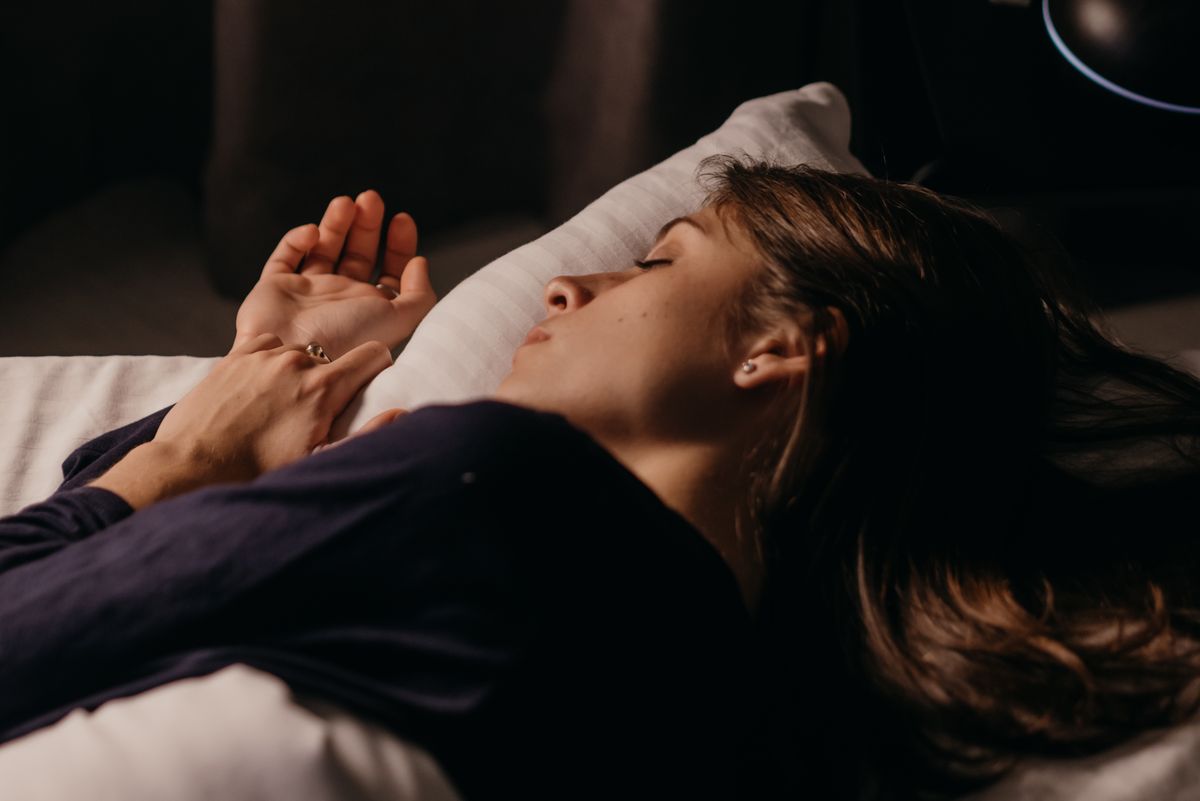
A cool, dark bedroom supports the natural body temperature drop and melatonin release your brain needs to initiate deep sleep.
Darkness: Why "Mostly Dark" Isn't Dark Enough
Light is one of the most powerful signals your brain uses to regulate the sleep-wake cycle. When light hits your retina, it suppresses melatonin — the hormone that makes you feel sleepy — a mechanism that made perfect sense for ancestors waking at sunrise and sleeping after sunset, but now competes constantly with artificial lighting and screens.
Research shows that room light exposure before bedtime shortens melatonin duration by approximately 90 minutes. Critically, even dim light during sleep can suppress melatonin and fragment sleep cycles, with light exposure during the first half of the night being the most disruptive to overall sleep quality.
True darkness means eliminating every light source — street lamps leaking through curtains, moonlight, alarm clock displays, and the small LED charging indicators on electronics that seem harmless but are surprisingly disruptive over a full night's exposure.
Practical fix: Cover LED standby lights with small pieces of tape, flip your alarm clock face down or move it across the room, and consider blackout curtain liners — they attach behind existing curtains and block over 95% of outside light, one of the highest-impact, lowest-cost upgrades available for sleep.
The Heliyon review's clearest, most actionable finding on noise: all sound in the sleep environment should be reduced to below 35 decibels — roughly the volume of a whisper or quiet library.
Importantly, it's not just volume that matters — it's predictability. Unpredictable, irregular noises (a car passing, a neighbor's door, a partner shifting) are far more disruptive than steady background sound, because sudden changes trigger the brain's orienting response even during sleep. This is why consistent white noise, pink noise, or nature sounds can improve sleep in noisy environments — they raise the baseline so that irregular disturbances need to be louder to cause an arousal.
Consistent background sound can mask unpredictable noise spikes that would otherwise cause micro-arousals throughout the night.
Air Quality and Humidity: The Overlooked Factor
Humidity between 40-60% relative humidity is generally considered optimal for sleep. Air that's too dry can irritate airways and skin, while air that's too humid can create discomfort and promote allergen growth — both indirectly fragmenting sleep even when temperature and darkness are otherwise well managed. Sea-level air quality with adequate ventilation is also considered optimal, supporting the case for airing out bedrooms regularly and using air-purifying strategies where needed.
Physical Comfort: The Fifth Pillar Most Guides Skip
Here's a truth that surprises many people: even with perfect temperature, complete darkness, ideal humidity, and near-silence, poor physical support can still fragment sleep. Your mattress and pillow affect sleep through concrete mechanical mechanisms — spinal alignment, pressure relief, and the resulting micro-movements your body makes throughout the night as it searches for a comfortable position.
During sleep, your spine should maintain its natural alignment. When support is inadequate — a pillow that's too high, too flat, or doesn't match your neck's curve — pressure points develop and the body compensates by shifting repeatedly, often without full conscious awareness. Each of these micro-movements is an opportunity to disrupt the deep sleep stages this entire guide is working to protect.
🛏️
The Physical Pillar of Your Sleep Environment
Temperature, darkness, and sound get most of the attention — but proper spinal alignment is just as foundational. The Derila Ergo's ergonomic butterfly design was engineered specifically to maintain proper neck and cervical spine alignment throughout the night, reducing the micro-movements and pressure points that silently fragment sleep even in an otherwise perfectly optimized bedroom.
Kicking off blankets repeatedly throughout the night
Squinting or covering your eyes upon waking to light
Being woken by household or outdoor noises
Waking with neck or shoulder discomfort
Tossing and turning to find a comfortable position
Dry throat, congestion, or skin irritation in the morning
Feeling that your bedroom "just doesn't feel restful"
Building Your Perfect Sleep Environment: The Protocol
Your Step-by-Step Setup Guide
1
Set Your Thermostat to 18-22°C (64-72°F)
Start within this core range and adjust slightly based on your personal comfort, bedding weight, and the season, since individual optimal temperature can vary.
2
Achieve True Darkness
Install blackout curtains or liners, cover small electronic LED lights with tape, and turn alarm clock displays away from your line of sight. Use a contoured sleep mask as a backup if you can't control every light source.
3
Keep Sound Below 35 Decibels
In quiet settings, this may require no intervention. In noisier environments, use white noise, pink noise, or nature sounds to create a consistent baseline that masks unpredictable disturbances.
4
Maintain 40-60% Humidity
Use a hygrometer to check your bedroom's humidity level, and add a humidifier or dehumidifier as needed to stay within the optimal range for comfortable breathing and skin.
5
Evaluate Your Mattress and Pillow Support
Check whether your spine maintains a neutral, natural alignment when lying in your usual sleep position. Persistent pressure points at the shoulders or hips, or waking with neck discomfort, are signs your support needs adjustment.
6
Prioritize Ventilation and Air Quality
Air out your bedroom regularly and avoid overly sealed, stagnant air where possible, supporting the sea-level-equivalent air quality research identifies as optimal for sleep.
Remember: You don't need every element perfect simultaneously. Start with temperature and darkness — the two factors with the strongest, most consistent evidence base — then layer in sound, humidity, and physical support as you're able.
✦
Your Bedroom Is a Sleep Tool, Not Just a Room
The research is remarkably consistent across these environmental factors: temperature, darkness, sound, humidity, and physical comfort aren't minor details — they're foundational mechanisms your body relies on to initiate and sustain deep, restorative sleep. Optimizing them doesn't require expensive technology or complicated routines, just deliberate attention to the numbers the science actually supports.
Combined with everything else in this series — consistent timing, managed cortisol, limited blue light, and awareness of how sleep shapes your focus and productivity — a properly engineered sleep environment completes the foundation for genuinely restorative rest, night after night.
🌙
Complete Your Perfect Sleep Environment Tonight
You can master temperature, darkness, sound, and humidity — but if your neck isn't properly supported, sleep can still fragment throughout the night. The Derila Ergo's revolutionary ergonomic design completes your sleep environment by addressing the physical support factor most guides overlook entirely.
Currently 75% off · Doctor-recommended · Risk-free trial
Research reviews indicate the optimal ambient temperature ranges between 17-28°C (63-82°F) depending on humidity, with most studies pinpointing 18-22°C (64-72°F) as the range that best supports sleep continuity in healthy adults. Individual variation exists based on age, region, and season.
How dark should a bedroom be for sleep?
Complete darkness is considered optimal for sleep. Research shows that exposure to room light before bedtime shortens melatonin duration by about 90 minutes, and even dim light during sleep can suppress melatonin and fragment sleep cycles, with the first half of the night being most sensitive to disruption.
How much noise is acceptable in a sleep environment?
A comprehensive review recommends all noise in the sleep environment be reduced to below 35 decibels. Since unpredictable noise is more disruptive than steady noise, consistent background sound such as white or pink noise can help mask irregular disturbances like traffic or a partner's movements.
Does humidity affect sleep quality?
Yes. Research indicates the optimal relative humidity range for sleep is approximately 40-60%. Humidity that is too high or too low can affect comfort, breathing, and skin, indirectly disrupting sleep continuity even when temperature is otherwise ideal.
Can a pillow really affect sleep quality as much as temperature or darkness?
Yes. Physical comfort factors like pillow support and spinal alignment work alongside temperature, darkness, and noise as core pillars of the sleep environment. Poor neck and spine alignment causes repeated micro-movements throughout the night as the body seeks relief, fragmenting sleep even when other environmental factors are optimized.
Sources & References
Engloner AI, Németh K — "A review of the environmental parameters necessary for an optimal sleep environment" — Heliyon 2025;11(17):e44193 — sciencedirect.com
Yasmeen, Hong — "Exploring the Interconnection of Sleep Quality, Indoor Environmental Factors, and Energy Efficiency" — Indoor Air 2025;8245786 — onlinelibrary.wiley.com
Sleep Foundation — "Bedroom Environment: What Elements Are Important?" (2026) — sleepfoundation.org
Sleep Foundation — "The Best Temperature for Sleep" (2026) — sleepfoundation.org
Cleveland Clinic — "What's the Best Temperature for Sleep?" (February 2026) — health.clevelandclinic.org


Comments
Post a Comment